
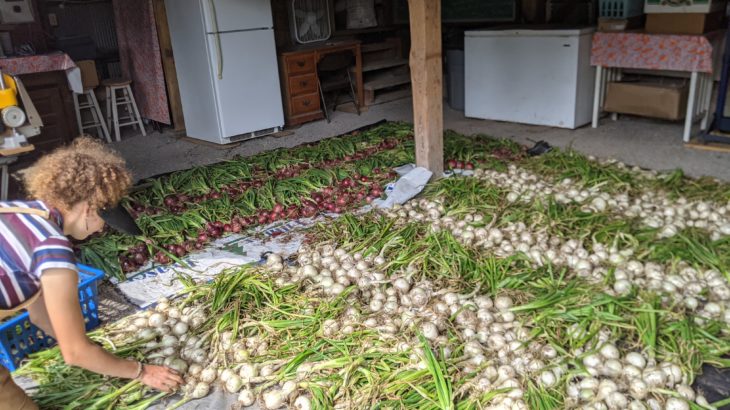
“You can never have too many onions,” is a favorite saying of Bob’s when we’re deep in winter planning for the coming growing season. That’s good to hear because we had our best harvest ever this year! The crop is a staple ingredient in kitchens around the globe, so it ties into an amazing range of cuisines and cooking styles. This year we planted 6 varieties of onions, so you’ll see white, yellow, pink and red/purple ones. Three varieties are “fresh eating” or “sweet” onions with higher moisture. These are the main ones the Free Choice shareholders will be seeing available. The other three, once cured will last into the wintertime for the Homestead Shares.
While the tomato plants are looking very healthy, the mature crop is slow coming on. We know it’s a favorite vegetable of many shareholders and we promise to make them available on the share table as soon as we can.
This week, if the weather forecast holds, we will be transplanting on Thursday night, 5:30-7:30pm and shareholders are welcome to join us.
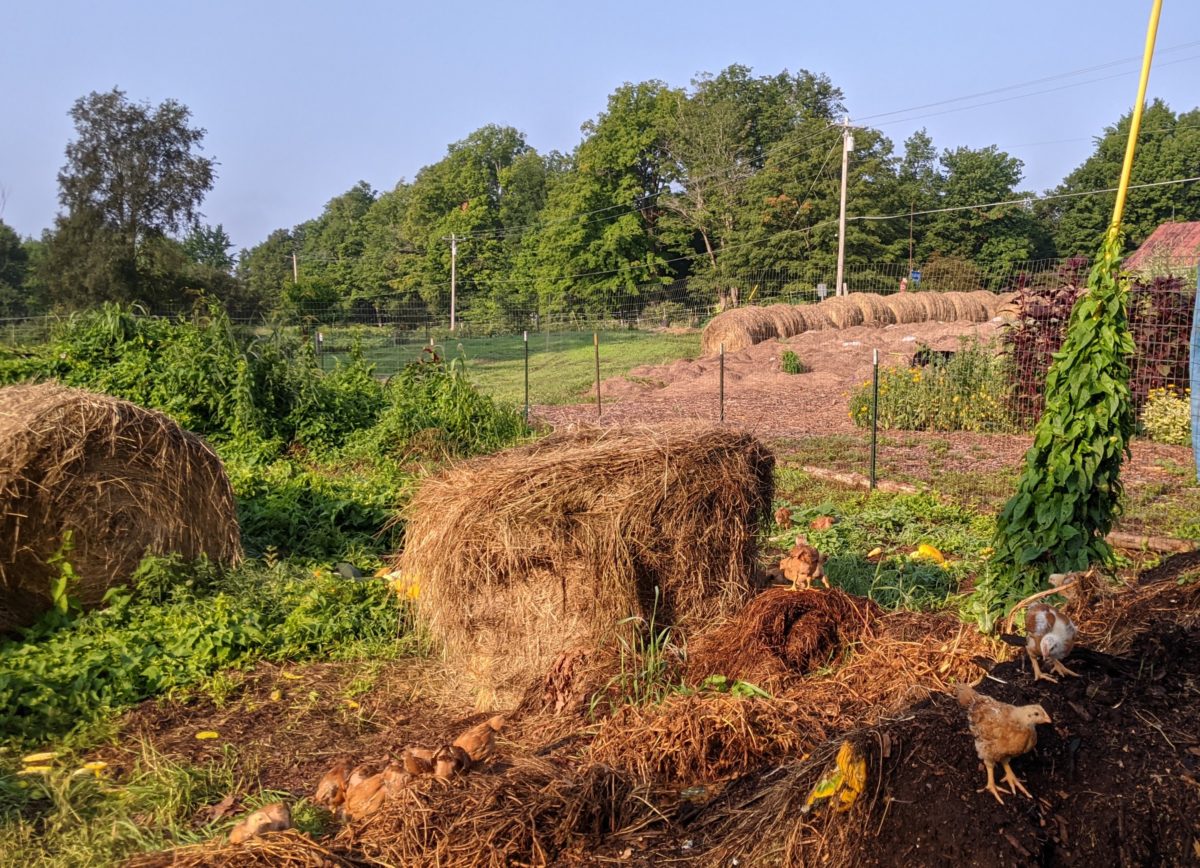
The chickens are roaming in their new outdoor fence, enjoying all the seeds and forage. If you want to watch them out and about, they are most likely to be adventuring when it’s not really hot or rainy. Kindly do not open the fence or try to pick them up.
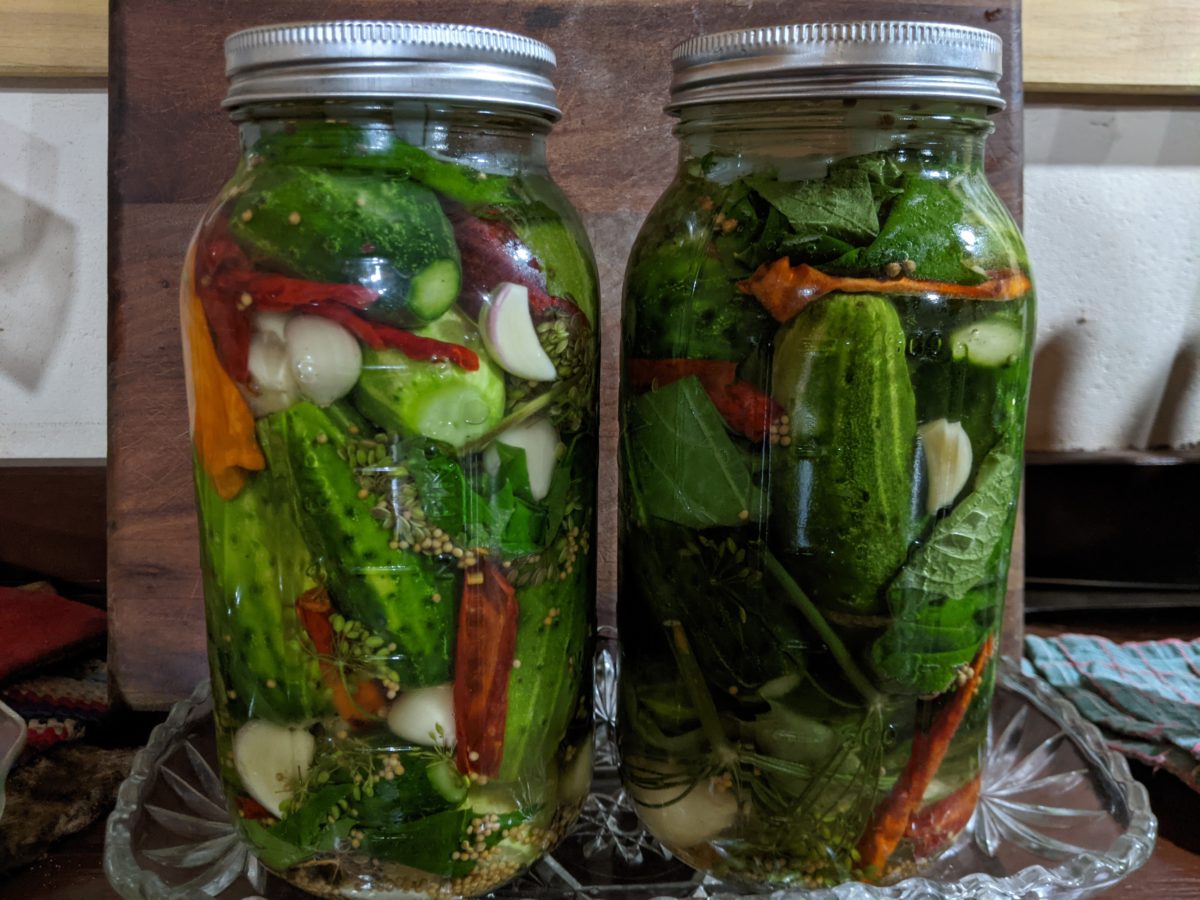
Our favorite summer project is to make fermented cucumber pickles. It’s an easy recipe that can be done at any size, from a single quart jar to a big crock. The essential ingredients are fresh cucumbers, salt and water. Beyond that, it’s your choice of flavorings. Here we have garlic, dill, coriander seed, dried red hot peppers and some grape leaves to help maintain crunchiness.
- If you’d like to try making lactofermented vegetable pickles, such as the full sour dill spears pictured above, we are here to help. From pickles to kimchi to hot sauces, vegetable ferments are a cornerstone of our diet throughout the year, and it’s fun to share with others. There’s no canning or vinegar required, just produce and salt and the aromatics of your choice. In her work at the Harvest Kitchen, Flip teaches preservation classes and last year she developed an infosheet to help folks dive into this process. Check out this link, the handout gives background on the process, how to do it at home and three tasty recipes. Have fun!
- The yellow wax beans are tender and juicy and can be used in all the same ways as green beans. The crop will be very abundant for the coming days and then wane in a week or two. Eat lots! We like to melt butter on really low heat and toss into a few cloves of minced garlic to infuse for five or so minutes. Pour the garlic butter over the cooked beans and season with salt and pepper to taste. There is a planting of green beans that will be ready around the start of September.
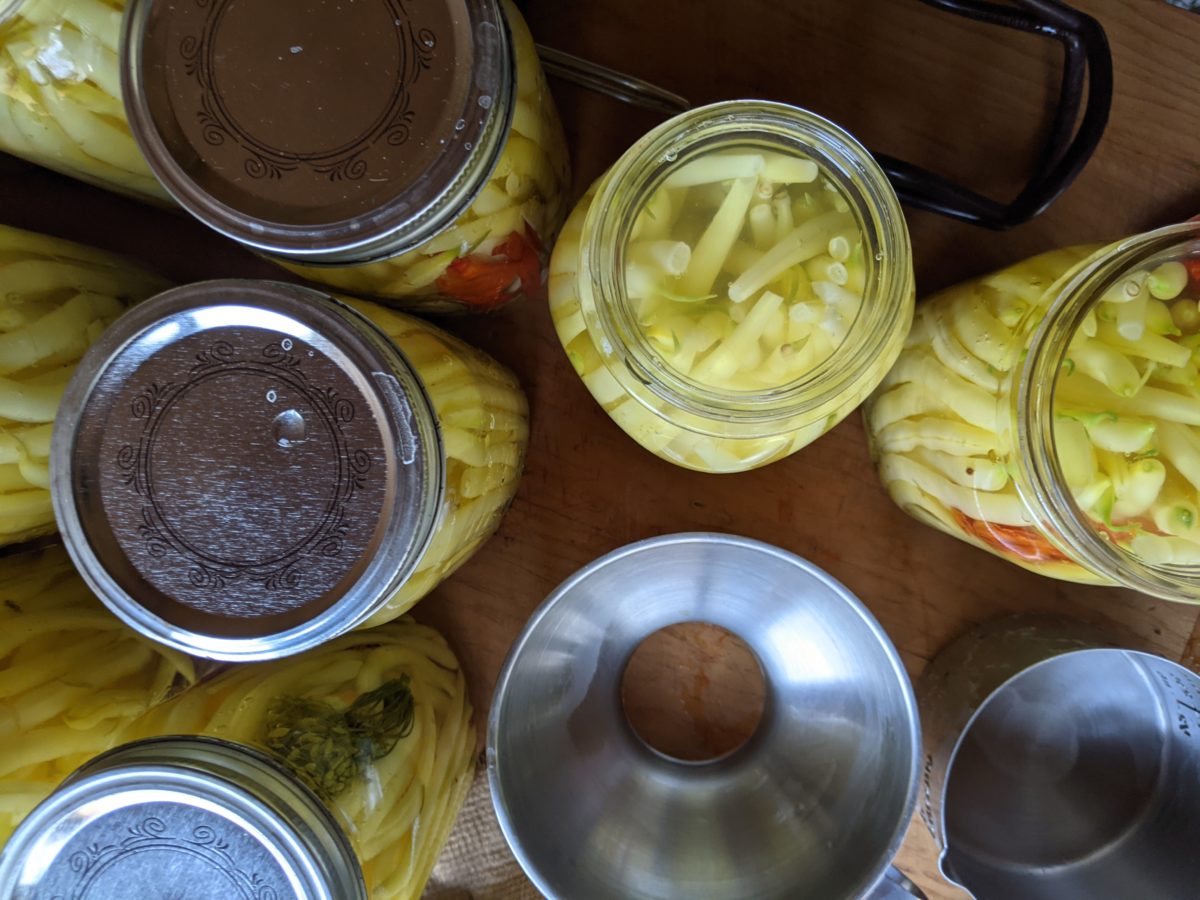
Big preservation week for our homestead, we canned a big batch of dill beans and another of cucumber pickles.
Crops Available
This list and availability are subject to change, check the share whiteboard at the start of every visit. If you are unsure about how to harvest: ask us! In person, via text or email.
Cell phone numbers, Flip: 315-854-5399 and Bob 315-854-5395.
*New this week
- Beets
- Cabbage
- Carrots
- Celery stalks
- Cutting flowers
- Fennel bulb
- Kale, curly or dinosaur
- Lettuce greens
- Mixed salad greens
- Onions
- Rainbow chard
- Scallions
- Summer squash
- Purple tatsoi
- Yellow wax beans
- Zucchini
Culinary and Medicinal Herbs
- Basil
- Bee balm
- Borage (edible flowers)
- Calendula
- Cilantro
- Dill
- Fennel fronds
- Lavender
- Lemon balm
- Lemon verbena
- Lime basil
- Mint
- Oregano
- Rosemary
- Sage
- Thyme
- Tulsi holy basil
- Winter savory
- Yarrow
In good health,
-Flip & Bob