
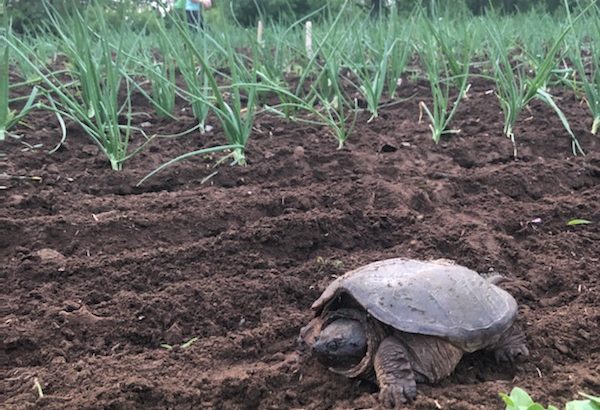
Did you see any snapping turtles this week? It’s the time of year when female turtles are out and about seeking sandy places to bury their eggs. The farm is not far from a large marsh and this week we saw turtles on multiple days, sometimes several in the same day. They showed no aggression, we just let them complete their mission. They laid eggs in a couple of our mulched beds (and who knows where else!). While littleGrasse is a tranquil place, it’s still a working farm with lots of activity. Remember to be alert when you are walking about- whether it’s a female snapping turtle passing through, a hose to step over in your path or a passing tractor, let everyone in your household know that it’s important to stay aware. Safety first!
Crowd favorite, we direct seeded the edamame this week. Now the majority of our biggest plantings are in for the season, so the focus shifts to maintenance, like weeding, mulching, and watering. It’s been so moist lately, we haven’t needed to do any supplemental watering. As a general rule, vegetable plants grow steadily with around an inch of water each week. Since our soil is on the sandy side, mulching is an excellent tool for us that simultaneously holds moisture in the soil and reduces weeding. The big plantings yet to come in the season are the fall crops of potatoes, carrots and beets. The first plantings of these crops are all already growing, which will mature for summer eating.
Soon we will have garlic scapes, the edible portion of a maturing hardneck garlic that we snap off so that the cloves will grow larger. You’ll find them in the shareholder fridge and they will be VERY abundant. Don’t be shy when grabbing garlic scapes for projects (awesome for grilling season).
In the fields 10am-noon with potluck lunch to followIf you’d like to join us in the field for a non-garden morning, shareholders have an open invitation for Wednesdays 5:30-7:00pm as well as any Wednesday or Saturday 9am-1pm.
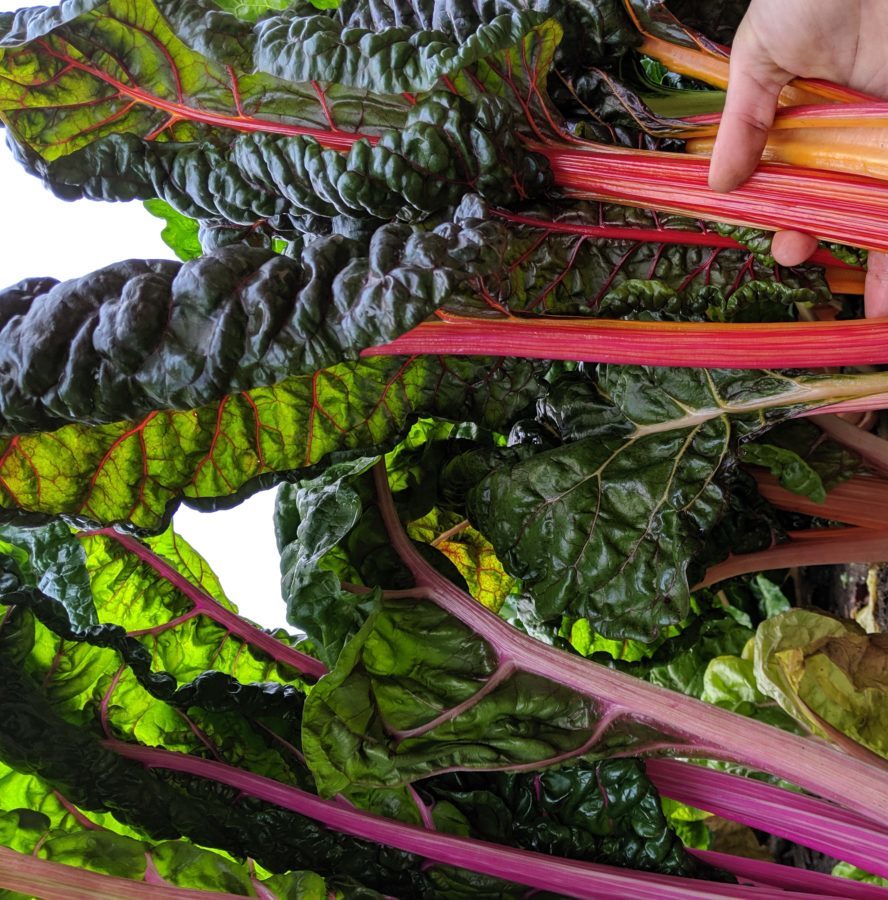
Plant Spotlight: Chard. It’s fantastically colored, a vigorous grower and an excellent source of vitamins K, A, and C as well as a good source of magnesium, potassium, iron and fiber. The flavor of chard is similar to spinach and beet greens, of which it’s related. When you cook it up next- by steaming or braising- try pairing it with one or more of the following flavors: garlic, thyme, cilantro, basil, cumin, saffron, nutmeg, fresh lemon or a dry cheese such as parmesan.
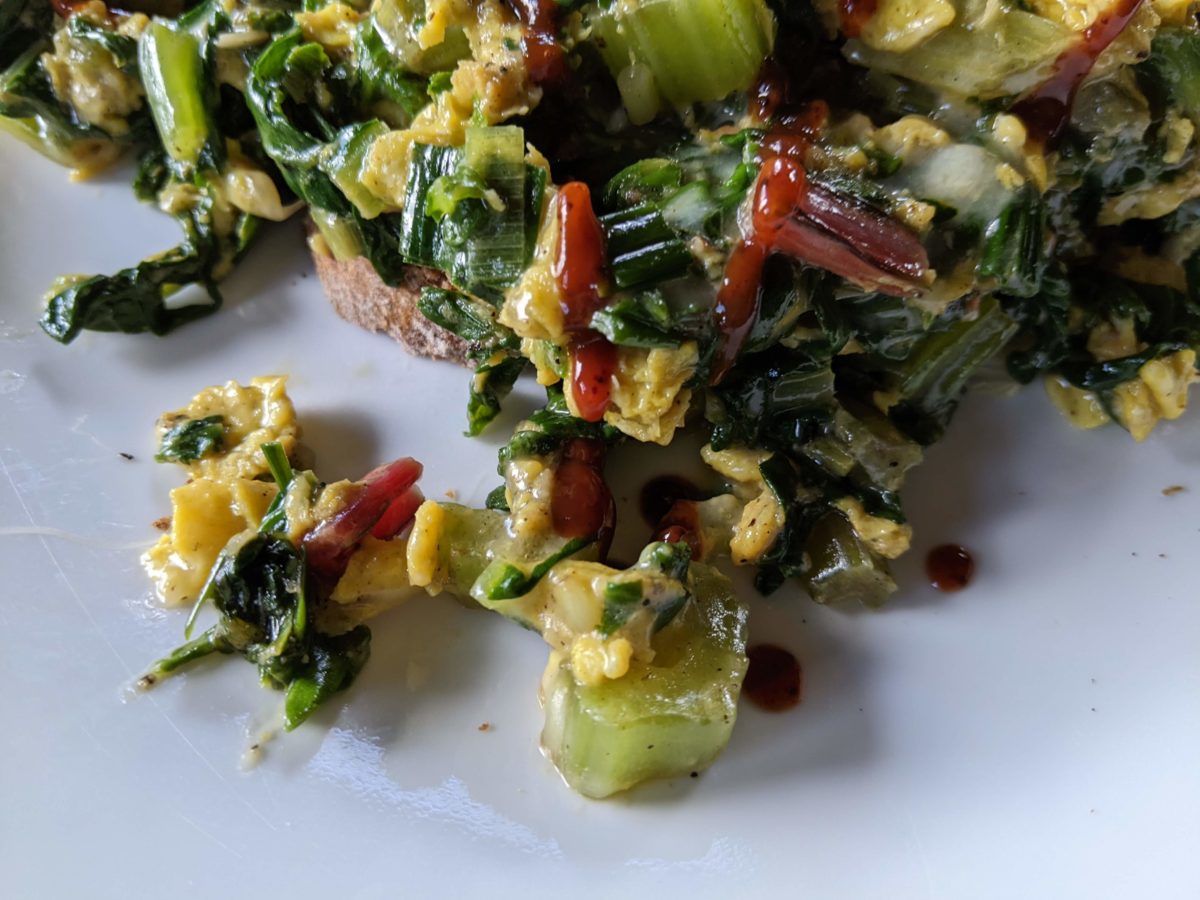
A speedy breakfast or lunch can be sauteed chard with spices of choice and scrambled eggs. We toasted bread to turn it into an open faced sandwich including dollops of hot sauce.
Tips for Success
- Chard and (soon to be available) kale are harvested in the same way. Cut the largest leaves from each plant, they are located on the outside, lower on the stalk. The center of the plant must always be left alone, because that is where the new leaves sprout.
- Cut head lettuce with a knife, right at the soil level. Sometimes the outer leaves might be damaged, discolored, or chewed by insects. Those leaves can be pulled off and left in the aisle or put in the metal can at the washstand for food scraps. To wash, dunk the heads in cold water then shake off the excess moisture.
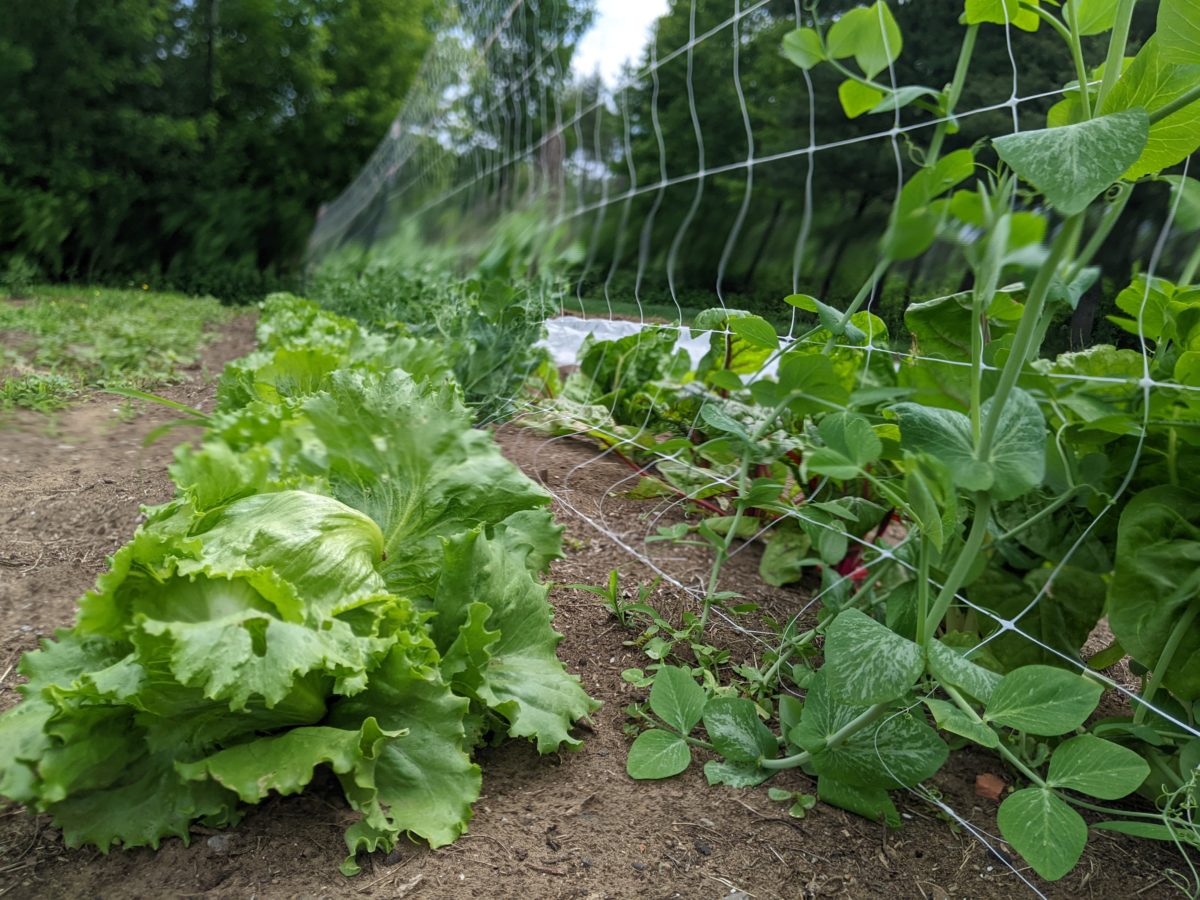
Here’s how to find the newly marked bed of (mini) head lettuce. Walk up the sandy driveway on the left of Irene’s field. Turn right on the grass path before the in-ground greenhouse. Walk until you get to the only bed with a white vertical trellis. This bed has three things planted in it. A single row of head lettuce, then a single row of peas up the middle climbing the netting and a single row of rainbow chard. The bed is deceivingly long (100+ feet). If you are finding bare ground or the plants are already harvested, walk farther down the bed, most of the chard and lettuce are on the second half of the bed.
Crops Available
This list and availability are subject to change, check the share whiteboard at the start of every visit. If you are unsure about how to harvest: ask us! In person, via text or email.
Cell phone numbers, Flip: 315-854-5399 and Bob 315-854-5395.
*Asterisk marks crops added this week
- Beets greens*
- Green garlic (immature garlic, entire plant is edible)
- (mini) Head lettuce*
- Rainbow chard, also called Swiss chard
- Rhubarb
- Spinach
Culinary and Medicinal Herbs
- Anise hyssop
- Bronze leaf fennel*
- Chamomile
- Chives
- Cilantro
- Lemon Balm
- Lovage
- Mint
- Oregano
- Rosemary*
- Sorrel
- Tarragon
- Winter Savory
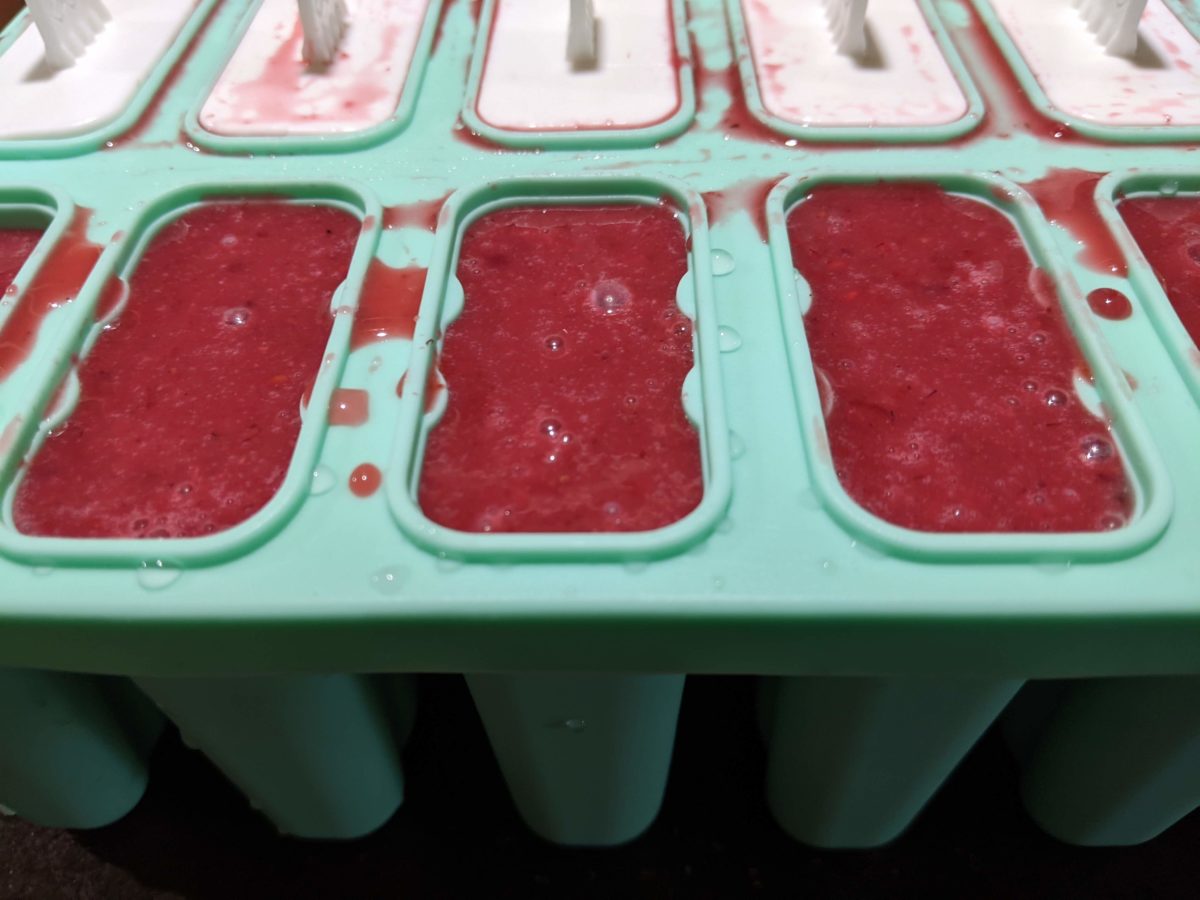
Seeking inspiration! We officially declared it the summer of homemade popsicles at littleGrasse. So far we’ve stuck to simple combinations while using the berries in our freezer from last season’s harvest, like these raspberry-blueberry pops. Does anyone have any experience with pops that include herbs or vegetables? If you’ve got any flavor combinations or ratios for ANY kind of frozen treat that includes at least some ingredients that can be sourced from northern New York, let us know!