Hello from August! This is the time of year when the gardens take on a more “lived in” look with deeper tones of green and sprawling plants. We have another hot, dry stretch ahead so watering is essential to keep the plants making steady progress. Irregular moisture can stress out plants, cause issue such as blossom end rot and lead to poor nutrient uptake or misshapen fruit.
Cherry tomatoes are on the horizon! Also, there’s a few goodies in the share that we had not originally planned to offer this year. Right now there’s tasty yellow and green cucumbers in the fridge and at the end of the week there should be green beans.
The flowers are peak! Stroll the beds all the way to the end to discover the calendula, dahlias and sunflowers. Several varieties such as statice, gomphrena and strawflower dry for long term enjoyment with little effort. Other varieties with more moisture can also be dried using silica gel or (apparently!) the microwave. Here’s an overview of four methods.
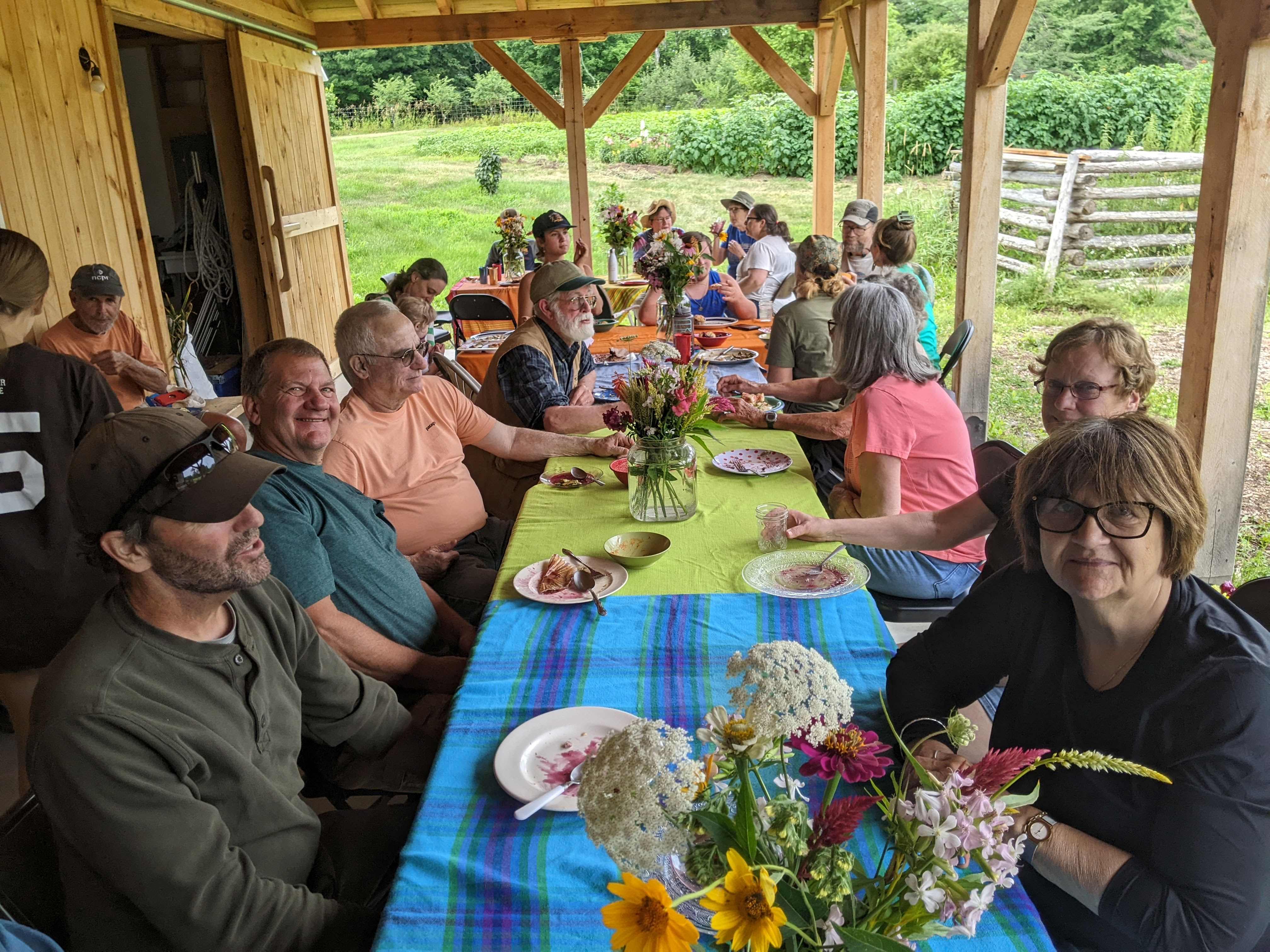
The festive July Garden Morning was also quite productive. We harvested several thousand bulbs of garlic and ate a big lunch. Thanks to the musicians Camilla, Paul, Rosemary, and CJ who kept our toes tapping. Happily we were joined by Bob’s family from Pennsylvania including sister Pat and brother Eugene looking at camera. Can you see the resemblance?! There’s three Garden morning left in the season on the last Saturday of each month: August 30, September 27, and October 25.
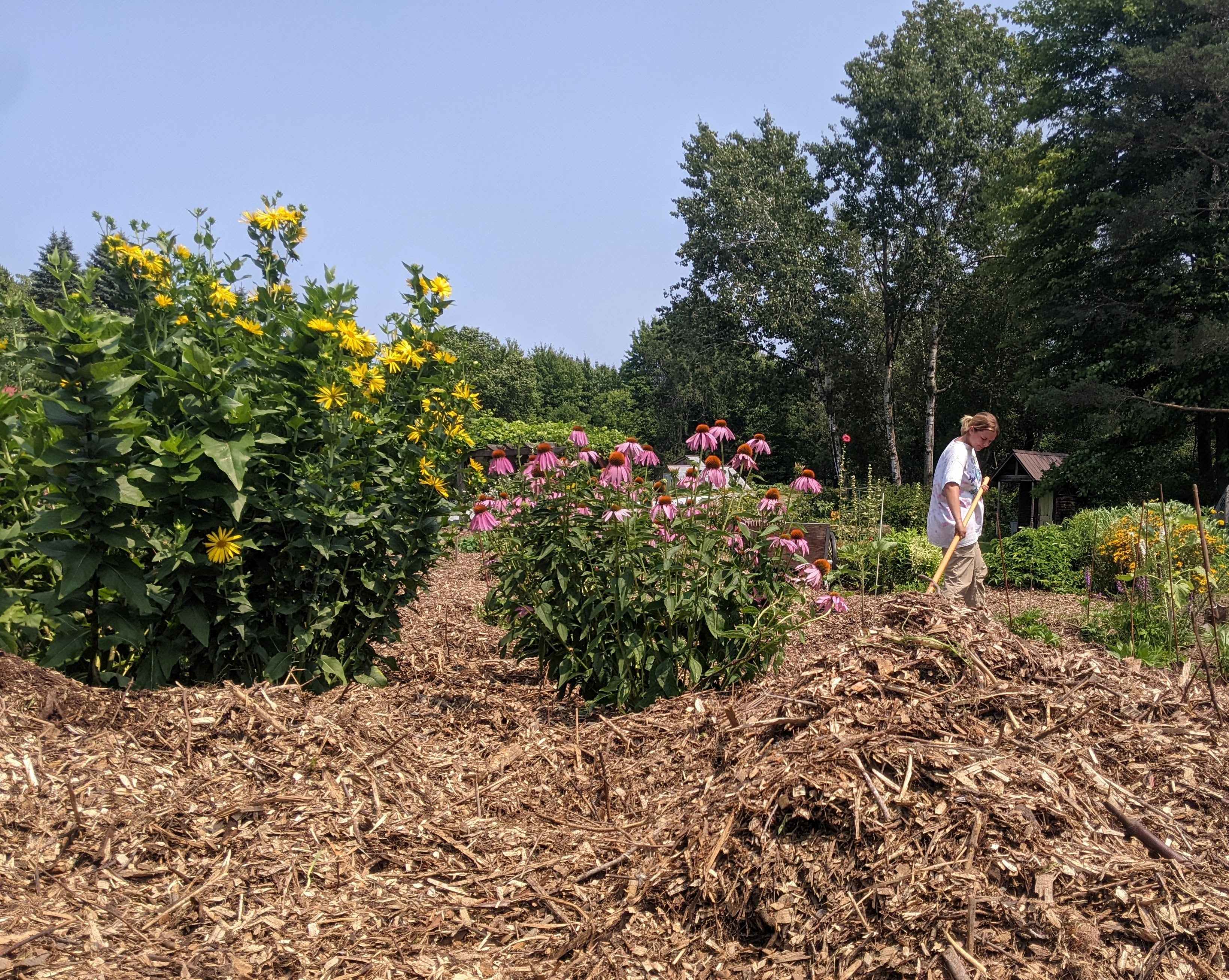
The perennial flower beds got a spiff up yesterday. We put down a layer of brown cardboard and then weighed it down with wood chips. Though this is a shorter term solution than a plastic barrier, both are repurposed resources available in our area and will naturally degrade into the soil adding organic matter.
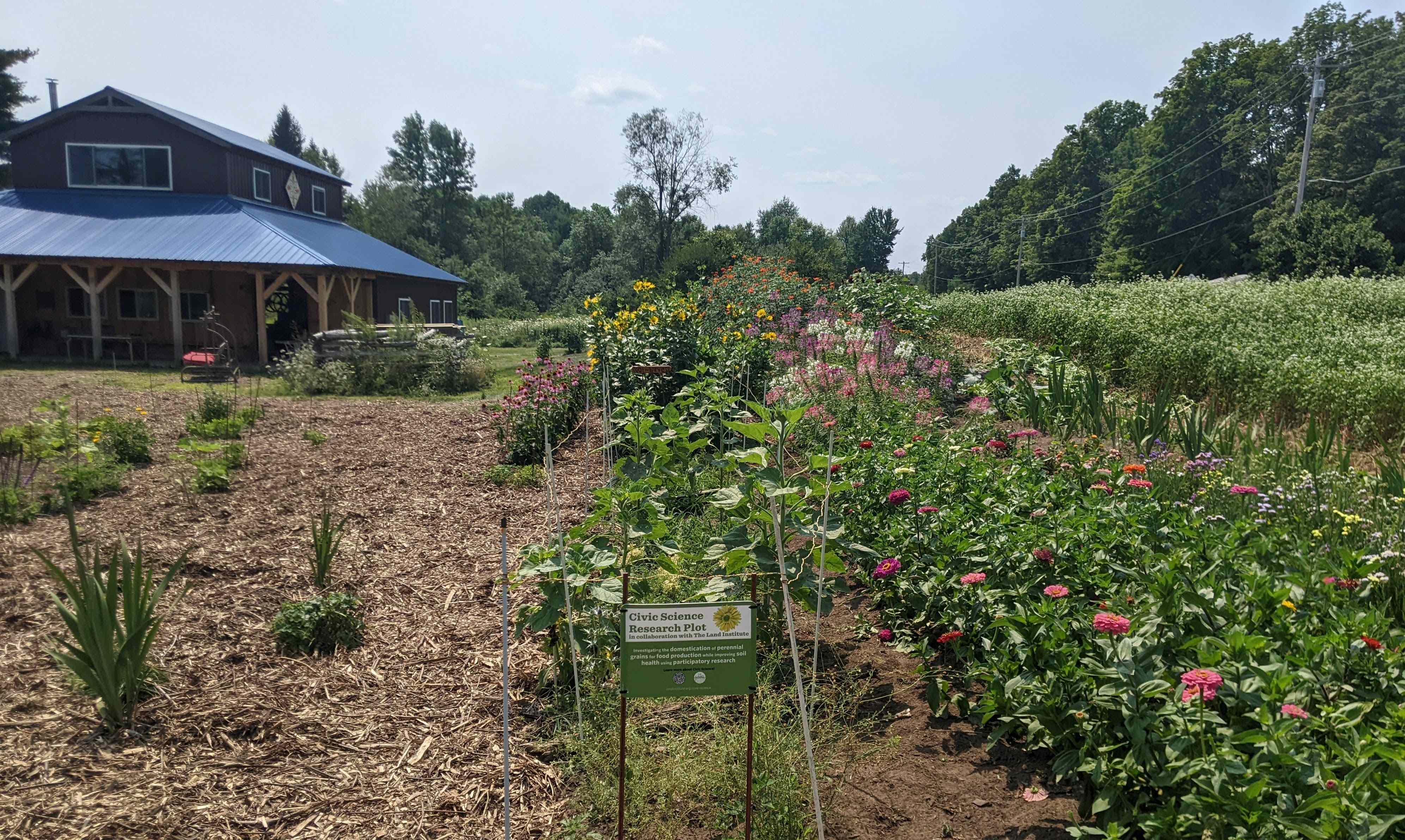
A reminder that the plants within this half bed area are part of a research project across the country relating to perennializing plants. As such, you can enjoy with your eyes but please don’t harvest within this area. The flowering plant right now is pretty cool, a perennial sunflower!
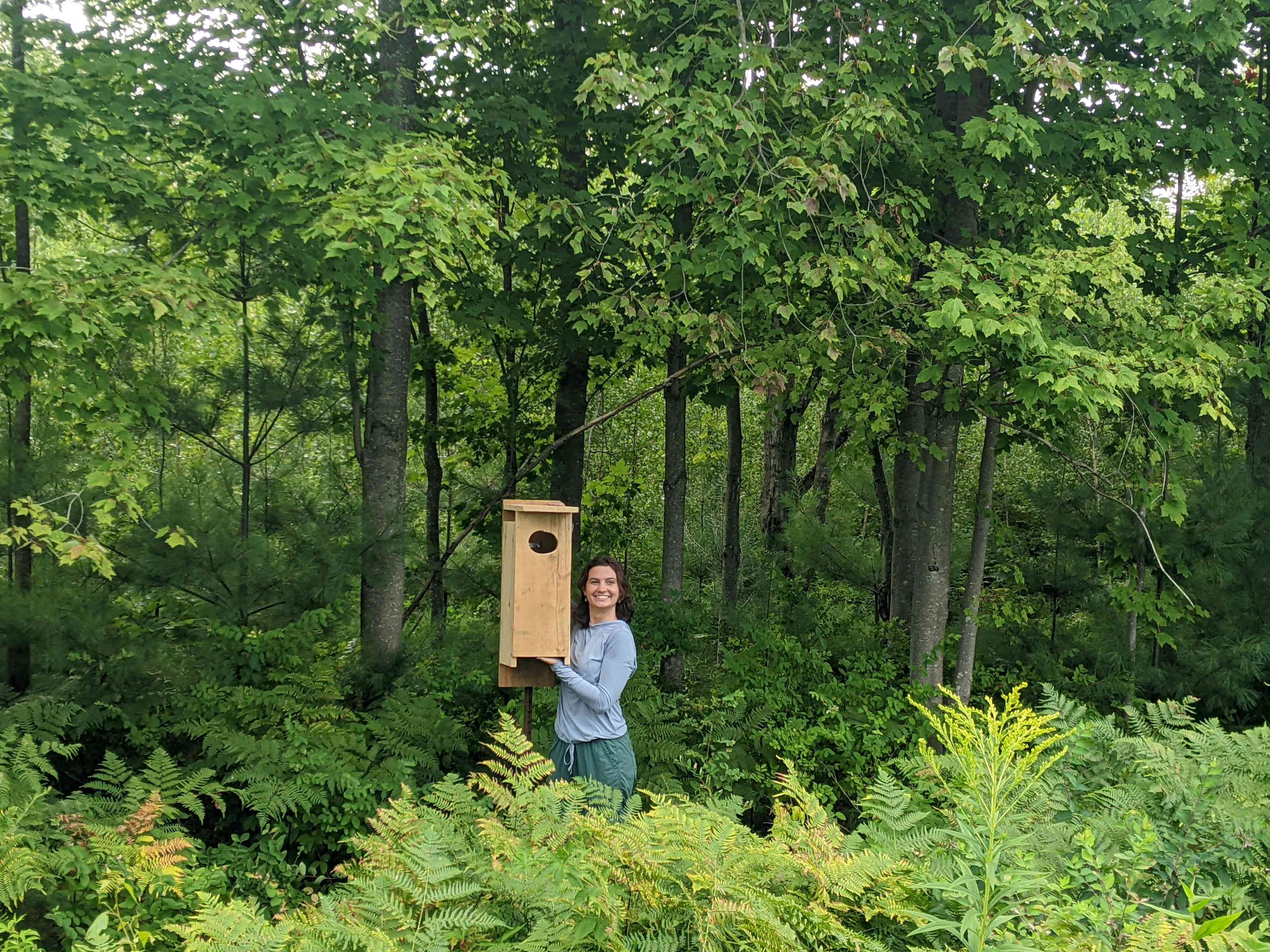
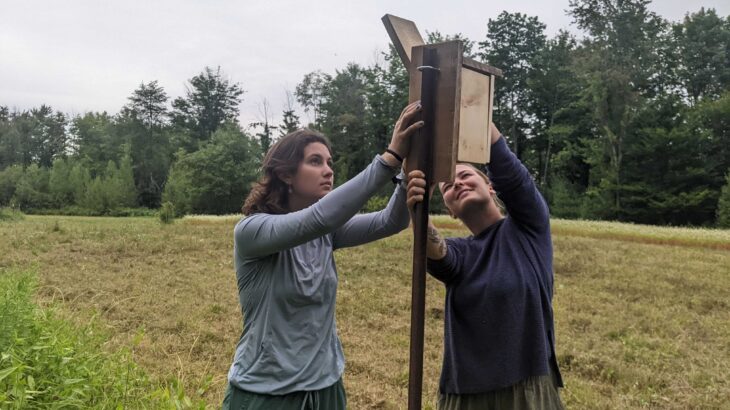
Two months flew by and Lauren’s birding internship has come to a close. In addition to building several bird boxes such as the one for wood ducks pictured here, she developed a trail map, made interpretive signage, connected with local experts, and researched practices of opening private lands for community trails. We’re not quite there yet, but it was great to see her motivation on this burgeoning topic and we appreciate her enthusiasm and creative spirit.
If you are a lover of native plants, check out the summer series written by Flip’s intern at Cornell Cooperative Extension. Amalia passionately researched a handful of plants found in our area and included history, cultivation and pollinator species. Find more on bee balm, milkweed, common evening primrose, rudbeckia, phlox, goldenrod, Joe Pye weed at the Fruition Local Foods blog here.
Crops Available
* marks new this week
- Basil
- Bee balm
- Celery
- Cilantro
- Cucumbers*
- Dill
- Kale, curly and lacinato/dino
- Leaf fennel
- Lemon verbena
- Mint
- Mixed lettuce greens
- Oregano
- Rainbow chard
- Summer squash and zucchini*
- Thyme
- Tulsi holy basil
- Rosemary
- Scallion
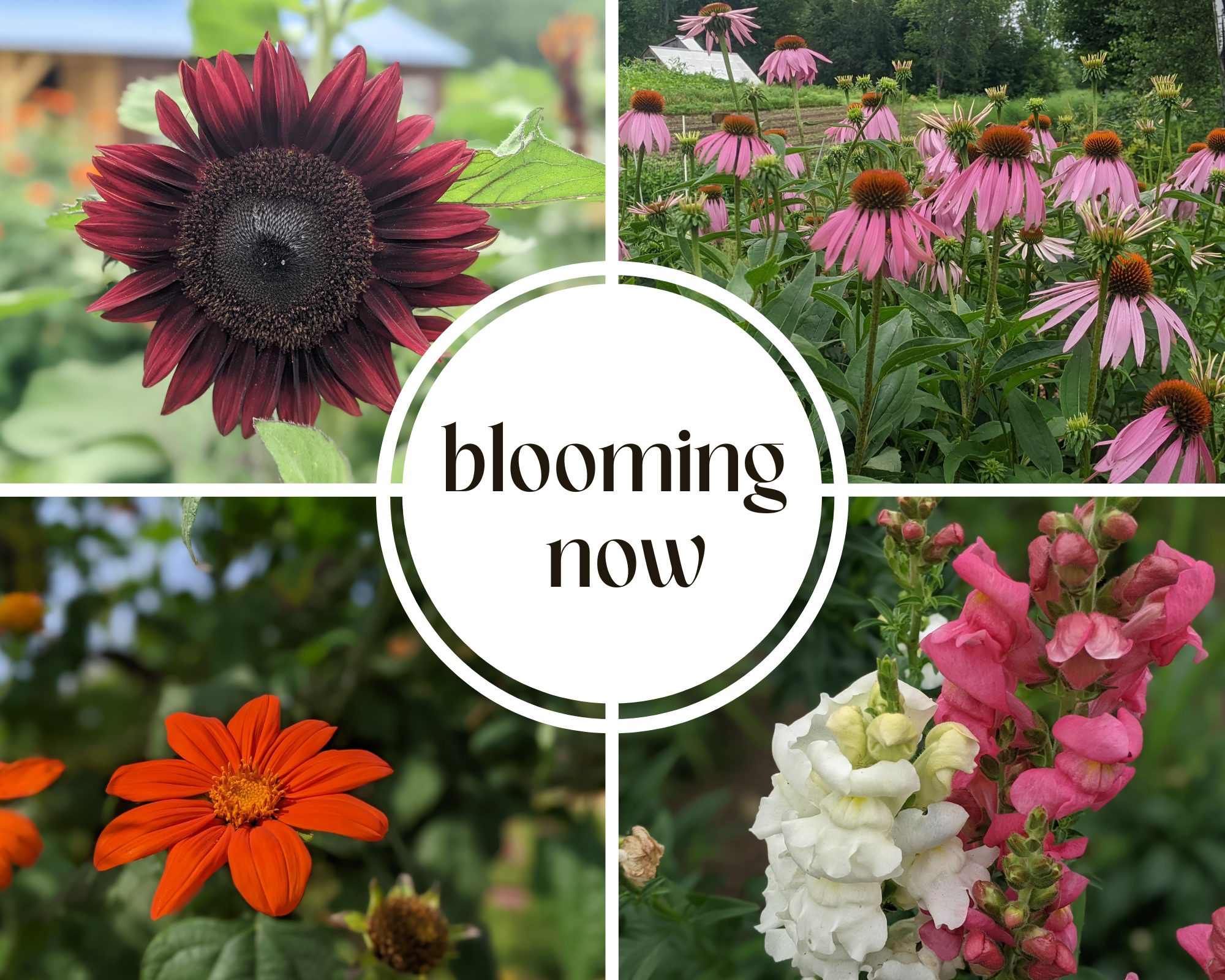
- Blooming flowers: Bee balm, calendula, celosia, cleome, echinacea, false sunflower, dahlia, daisy, gomphrena, lily, marshmallow, salvia, statice, snapdragons, strawflower, sunflower, tithonia, yarrow, zinnia.
- The only flower not available for harvest is the yellow perennial sunflower in the research plot. The plot has a string marking it off from the rest of the flower beds.
Awesome and informative
thanks for the beautiful newsletter
Dulli