
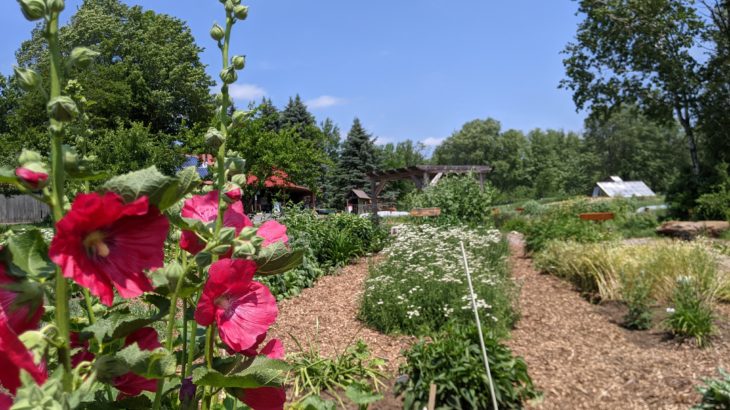
Farm Happenings
The solstice has come and gone and it’s the time of summer that (sometimes) Bob and Flip are able to sneak away for a couple days. We had a glorious retreat that included visits with family, peaceful woods hike at Hawk Mountain Sanctuary as well as nerding out by touring the oldest organic research station and farm, Rodale Institute.
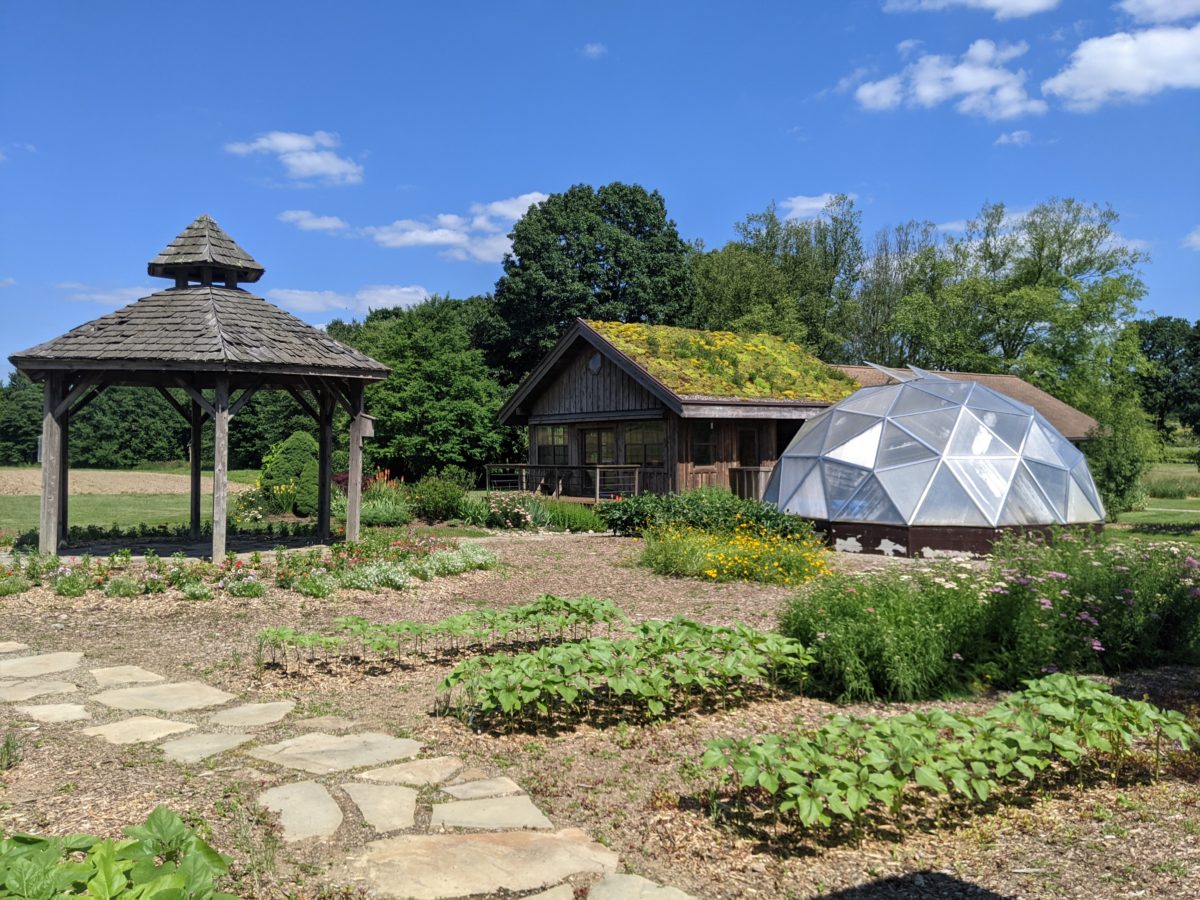
Demonstration gardens, with living roof in the background at the Rodale Institute in Pennsylvania.
While we were away, the three apprentices were superstars of the garden, being very productive at an annual task: mulching. Mulching is satisfying on many levels. Aesthetically it gives a tidy appearance to garden beds. On a practical note, it’s a powerhouse of benefits including holding in moisture (essential for our sandy soils), suppressing weeds (reduced labor for remainder of season) and adding organic matter as it breaks down and is eventually incorporated into the soil. We mulch areas that have crops in the ground for long periods of time including all the peppers, eggplants, brassicas, and perennial flowers.
We will tell you straight: We grow peas because they are such a popular crop, yet they take up ALOT of space for the amount of food/calories they produce. Since that is the case, we try to make sure people are able to pick them at least once, but we don’t plant the quantity for them to be around for weeks at a time. It’s a a fun, yet short-lived crop. We have snow peas and snap peas, and pod is edible for both.
Crops that will soon be available are early cabbage, young garlic bulbs and summer squash!
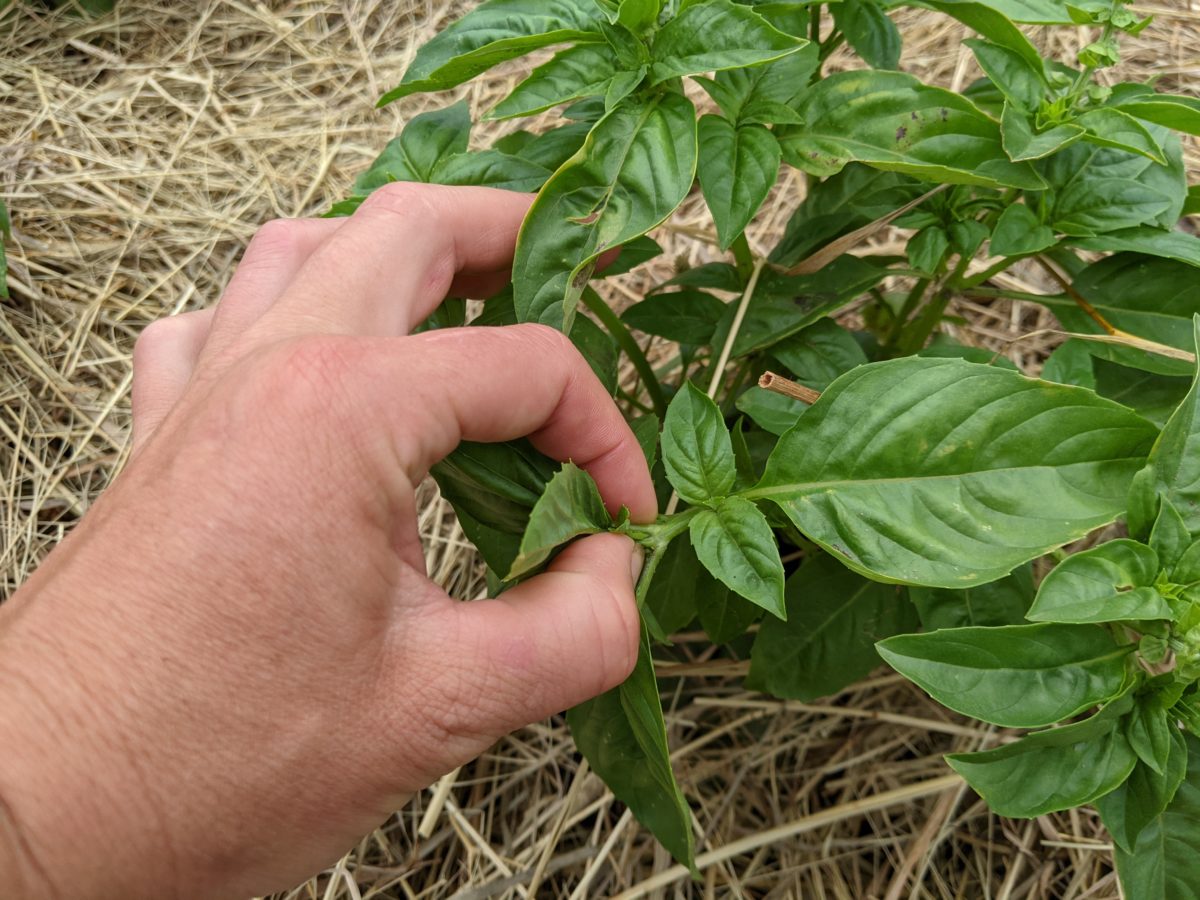
Basil grows symmetrical pairs of leaves. Remove the top clusters of leaves to allow the lower pairs to get larger.
Tips for Success
- Summer beets are deliciously sweet. The entire plant is edible raw or cooked. Last night we boiled the roots, slipped the skins off and diced them into a fresh dressing to add to a salad.
- Please note: Summer produce is not available for an unlimited period. Some crops are short lived, such as peas, while other crops may have lulls between two different planting, for example beans. We try to communicate about these little intricacies, but there are many variables: weather, how the plant grows, how consistently it is harvested, and more. There’s variability but we hope you will embrace the diversity with us!
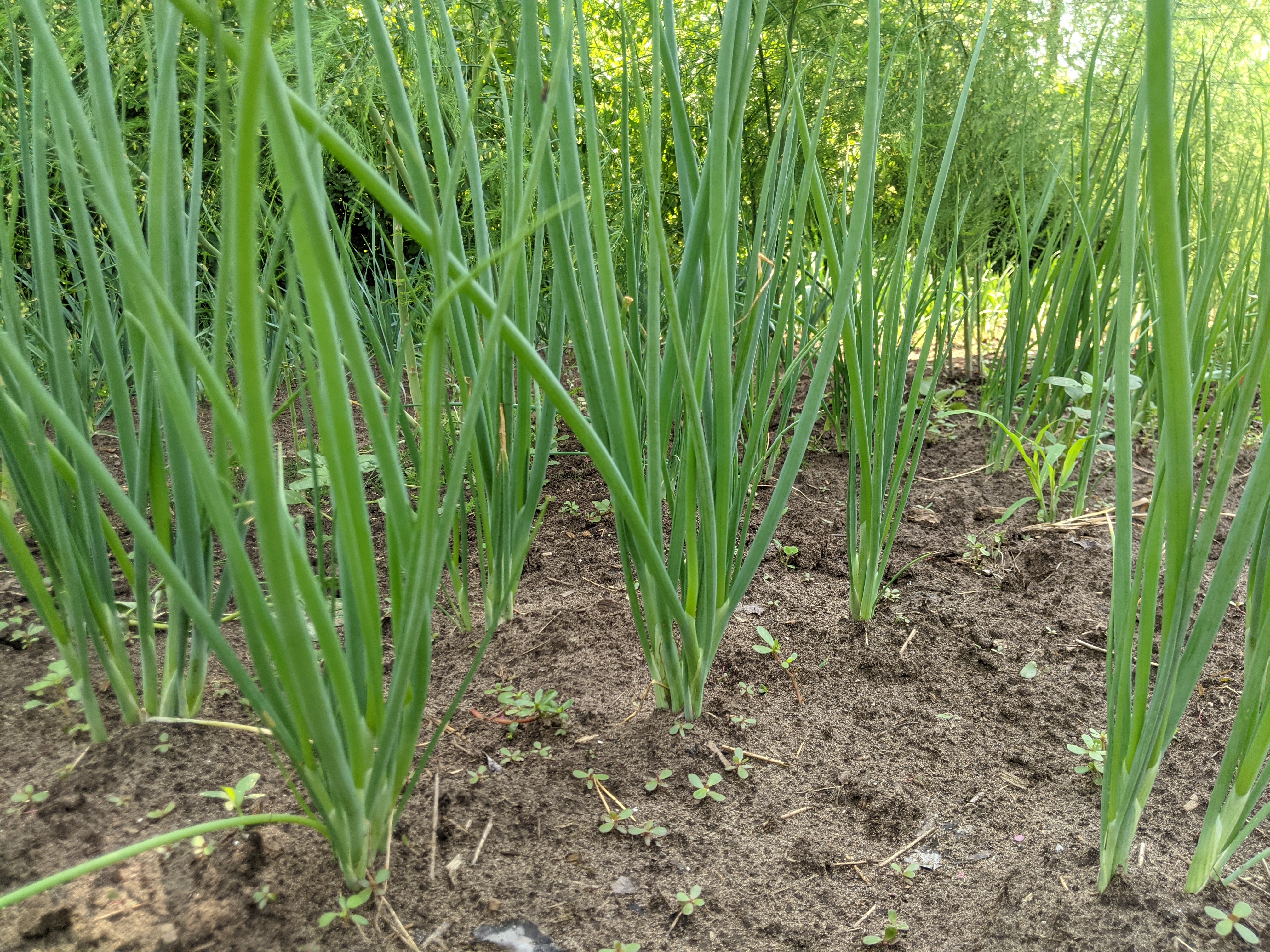
Here are scallions, also called green onions. In the field they are planted in clusters. Pull or dig with the trowel to remove the entire bunch.
Crops Available
Cell phone numbers, Flip: 315-854-5399 and Bob 315-854-5395.
*New this week
- Beets*
- Carrots
- Garlic greens (This is immature garlic with a mild flavor, chop up whole plant to toss into a cooked dish)
- Head lettuce
- Kale, curly or dinosaur*
- Lettuce greens
- Radishes
- Rainbow chard
- Scallions*
- Snow or snap peas*
- Spinach
- Purple tatsoi
- Anise hyssop
- Basil*
- Bee balm* (edible flowers, foliage or flowers used in teas)
- Borage (small edible flowers, great in salads)*
- Calendula*
- Chamomile
- Cilantro
- Dill
- Fennel fronds
- Lemon balm
- Mint*
- Oregano
- Rosemary
- Sage
- Sorrel
- Thyme
- Winter savory
- Yarrow*
Keep Cool,
Flip & Bob