
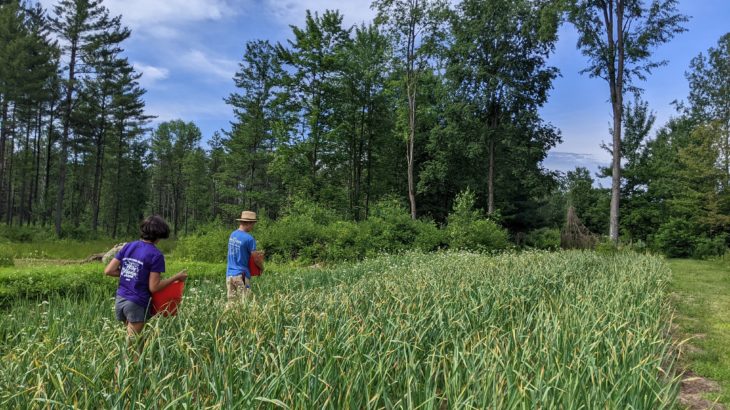
We took some time this weekend to enjoy other pursuits, visits with family and invigorating live music. These activities are great reminders of how excellent it is to be in northern NY in the summertime. Clear waters, infinite green and fairly benevolent sunshine.
We’ve had some issues with folks not minding what and where to harvest. It’s important for shareholders to only harvest from beds with a red painted wooden sign in the field. While we are committed to the “share” model, and believe the crops we grow are for our shareholders, all foods are not available at all times. There’s many reasons for this including: the crop may not be fully mature, there may be a different area that is currently marked for harvest, it’s being saved until there is a critical mass available for more shareholders, or we’re spacing out availability so that new items are offered as other crops are waning. We appreciate your cooperation and understanding. Remember to read the whiteboard at the start of every visit so you know if there are limits- take a photo if that’s useful- and then find the marked crops in the fields.
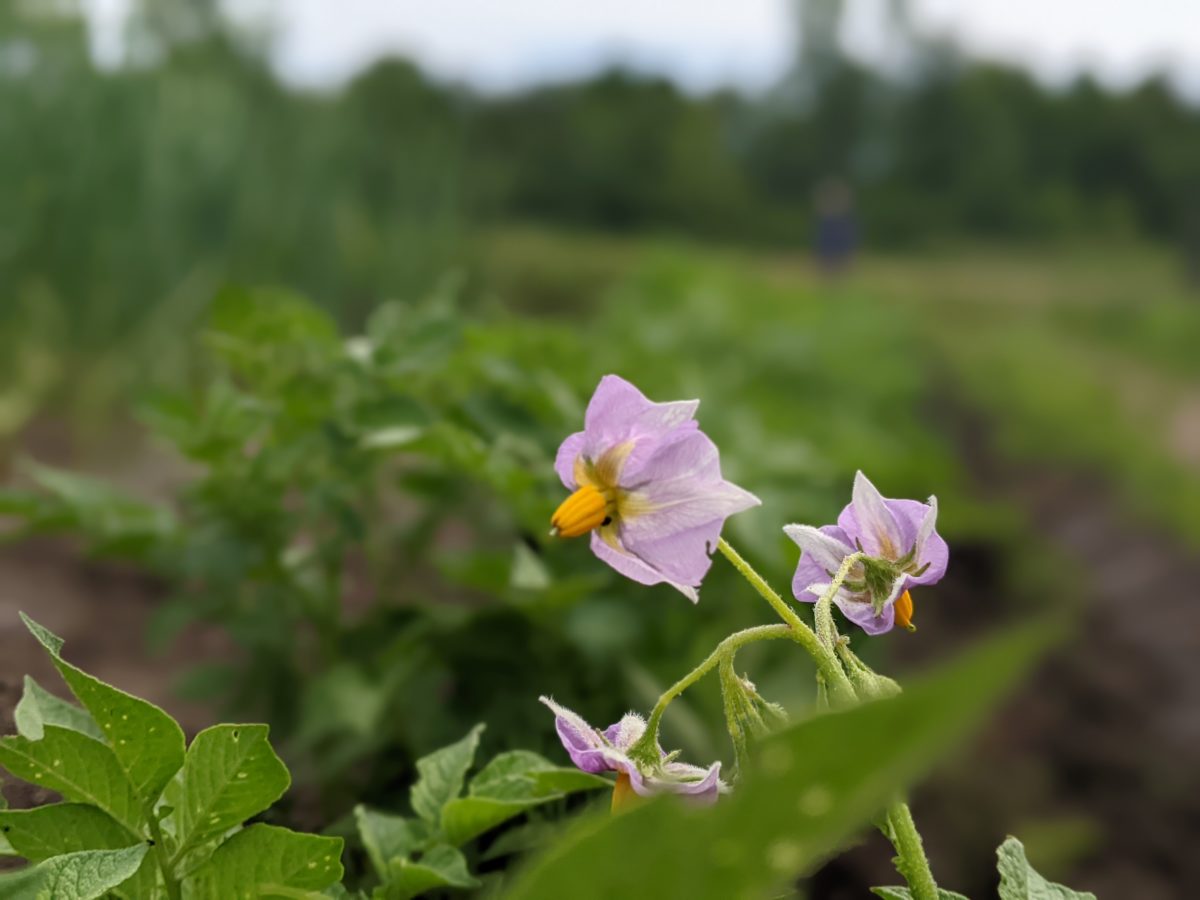
The first potatoes have begin to flower in the fields. Once pollinated, the plant will begin to set tubers in the ground which will grow over the coming weeks. After the plants die back, the harvest will begin.
Tips for Success
- The flowers are available for harvest. New varieties will continue to be ready every week. Anything that is blooming can be harvested. Being cut from your home plant is traumatic! For the longest vase life, bring a container of water with you into the field to immediately place the cut stems. Find other flower tips on the bulletin board in the share room above the sign in sheets. Enjoy these fabulous beacons of color!
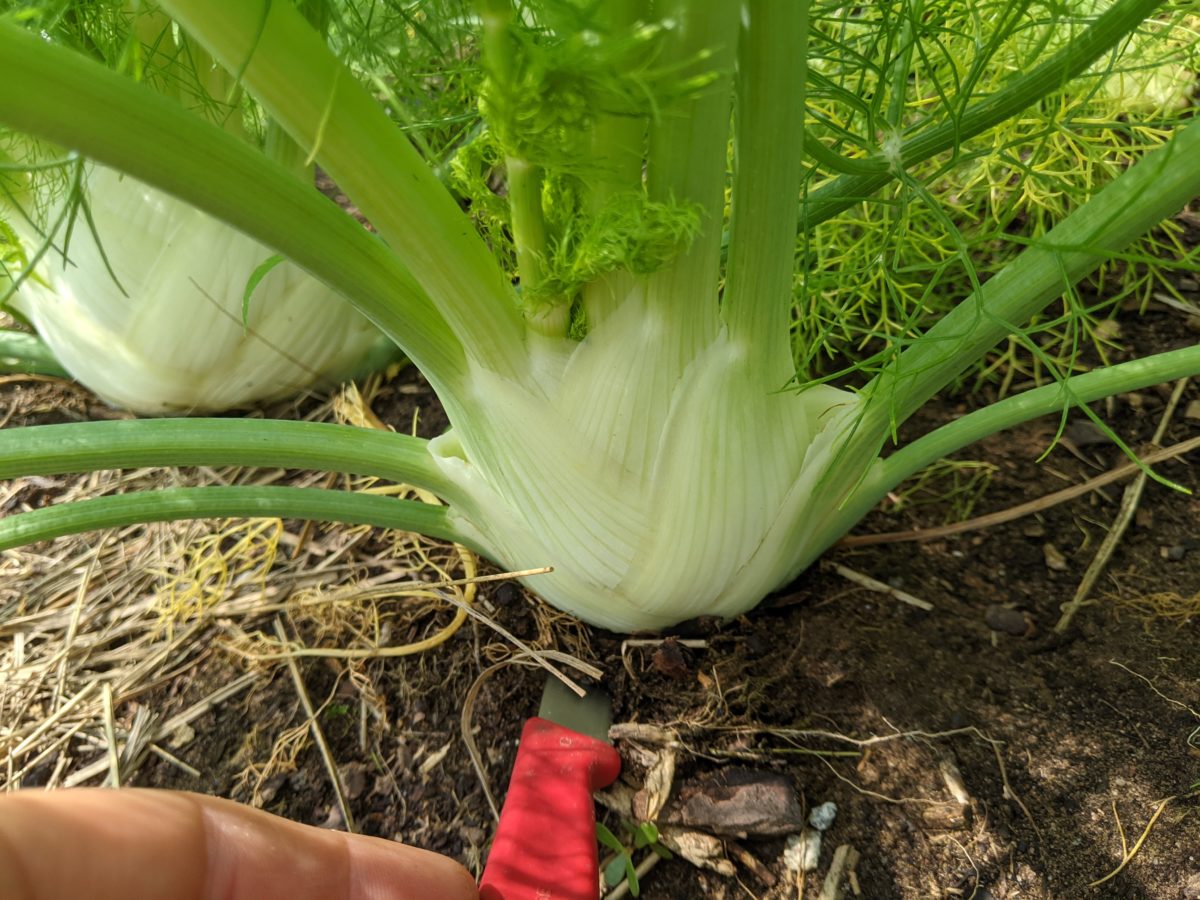
Plant Spotlight: All parts of the bulb fennel are edible. This Mediterranean plant is often associated with its capacity as a digestive aid, as in the sugar coated fennel seeds brought to tables after a meal in some Indian restaurants. The vegetable is a striking sight in the garden with its bulbous white base, hollow green stems and abundant airy fronds waving at the top. To harvest the full plant, use a sharp knife to cut below the base, under the soil surface. The plants licorice flavor can be used front and center in a dish by keeping it raw (such as slicing thinly into a salad) or it can be tamed with grilling, roasting and even lacto-fermenting. After these treatments the flavor has mellowed and has a hint of sweetness. Among other things, fennel pairs well with carrots, celery, tomato, potato, parsley, thyme, almonds, parmesan, chicken, and citrus.
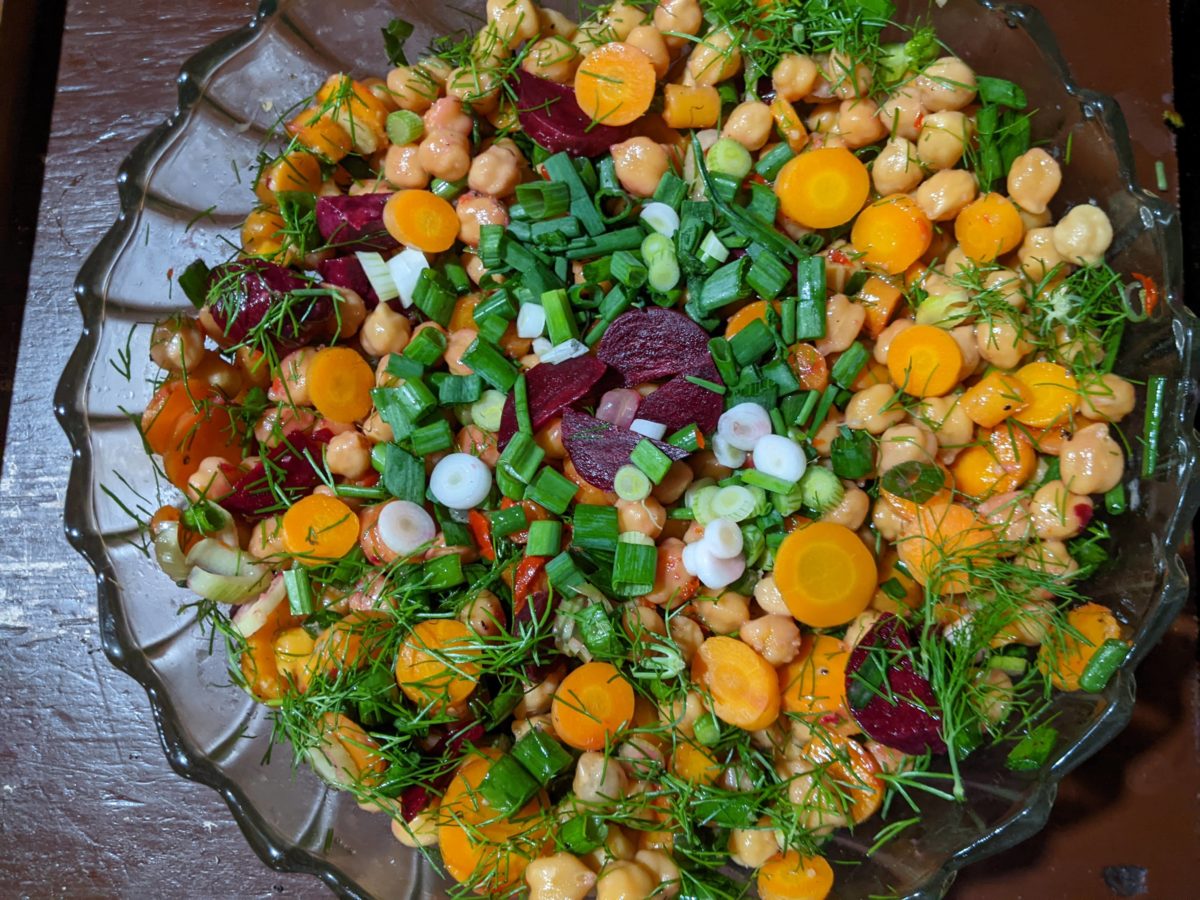
Summer salads have begun! Spring salads are loftier with the first greens and herbs of all shapes and sizes. The summer salads incorporate the bulkier items maturing in the garden such as carrots and beets. These beets were boiled ahead of time and their skins removed before dicing. To remove the pre-cooking step you can grate the roots. Chickpeas/garbanzo beans are a fabulous base. The dressing is so flexible, sometimes we tend towards a spicy mustard base, sometimes ginger as a primary accent and often a simple oil and vinegar with a pile of minced herbs.
Crops Available
This list and availability are subject to change, check the share whiteboard at the start of every visit. If you are unsure about how to harvest: ask us! In person, via text or email.
Cell phone numbers, Flip: 315-854-5399 and Bob 315-854-5395.
*Asterisk marks crops added this week
- Beets*
- Bulb fennel*
- Flowers*
- Garlic scapes, last basket in fridge
- Green garlic (immature garlic, entire plant is edible)
- Head lettuce
- Kale
- Lettuce greens
- Rainbow chard, also called Swiss chard
- Rhubarb
- Snow and snap peas, limited quantity one planting failed in germination*
- Spinach
Culinary and Medicinal Herbs
- Anise hyssop
- Basil
- Bronze leaf fennel
- Chamomile
- Dill greens
- Lemon Balm
- Mint
- Nasturtium, edible flower*
- Oregano
- Parsley
- Rosemary
- Sage
- Sorrel
- Tarragon
- Thyme
- Winter Savory